Announcing: vCluster’s Rancher OSS Integration
Today, we’re happy to announce our Open Source vCluster Integration for Rancher. It allows creating and managing virtual clusters via the Rancher UI in a similar way as you would manage traditional Kubernetes clusters with Rancher.
Why we built this
For years, Rancher users have opened issues in the Rancher GitHub repos and asked for a tighter integration between Rancher and vCluster. At last year’s KubeCon in Paris, we took the first step to address this need by shipping our first Rancher integration as part of our commercial vCluster Platform.
Over the past year, we have seen many of our customers benefit from this commercial integration but we also heard from many vCluster community users that they would love to see this integration as part of our open source offering. We believe that more virtual clusters in the world are a net benefit for everyone: happier developers, more efficient infra use, less wasted resources and less energy consumption leading to a reduced strain on the environment. Additionally, we realized that rebuilding our integration as a standalone Rancher UI extension and a lightweight controller for managing virtual clusters would be even easier to install and operate for Rancher admins. So, we decided to just do that and design a new vCluster integration for Rancher from scratch.
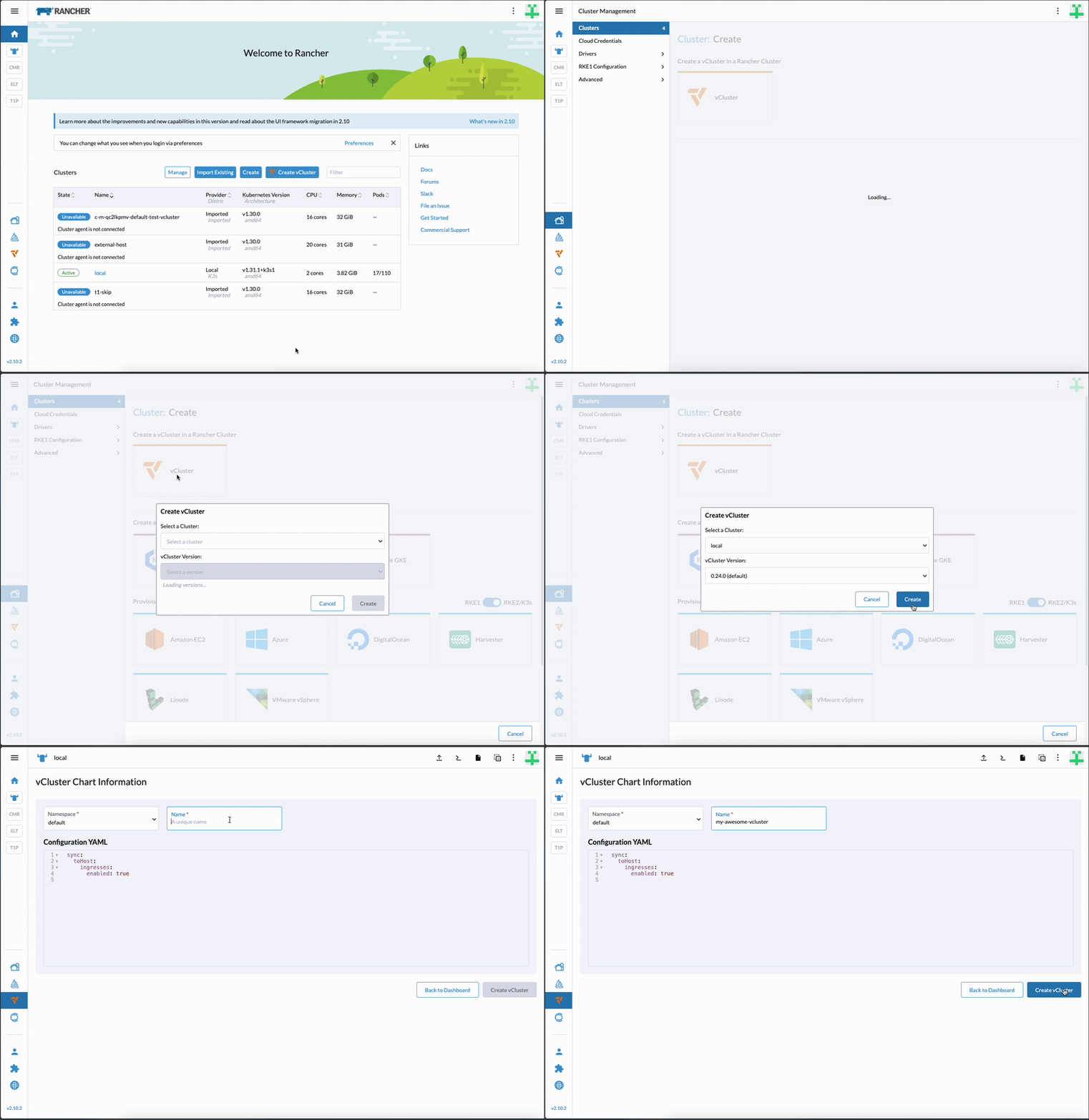
Anyone operating Rancher can now offer self-service virtual clusters to their Rancher users by adding the vCluster integration to their Rancher platform. See the gif below for how this experience looks from a user’s perspective.
How the new integration works
Using the integration requires you to take the following steps:
Have at least one functioning cluster running in Rancher which can serve as the host cluster for running virtual clusters in.
Installing the two parts of the vCluster integration inside Rancher
Our Rancher UI extension
Granting users access to a project or namespace in Rancher, so they can deploy a virtual cluster in there. That’s it!
Under the hood, when users deploy a virtual cluster via the UI extension, we’re deploying the regular vCluster Helm chart and the controller will automatically detect any virtual cluster (whether deployed via the UI, Helm, or otherwise) and connect them as clusters in Rancher, so users can manage these virtual clusters just like they would manage any other cluster in Rancher.
Additionally, the controller takes care of permissions: any members of the Rancher project that the respective virtual cluster was deployed into will automatically be added to the new Rancher cluster by configuring Rancher’s Roles.
And that’s it. No extra work, no credit card required. You have a completely open-source and free solution for self-service virtual clusters in Rancher. As lightweight and easy as self-service namespaces in Rancher but as powerful as provisioning separate clusters for your users.
Next Steps
In the long run, we plan to migrate users of our previous commercial Rancher integration to the new OSS integration but for now, there are a few limitations that still need to be worked on in the OSS integration in order to achieve feature parity. One important piece is the sync between projects and project permissions in Rancher and projects and project permissions in the vCluster Platform. Another one is the sync of users and SSO credentials. We’re actively working on these features. Subscribe to our changelog and you’ll be the first to know when we’ll have all of this ready for you to use.
Please note that deploying both plugins at the same time is not supported, as they are not compatible with each other.
For further installation instructions see the following: